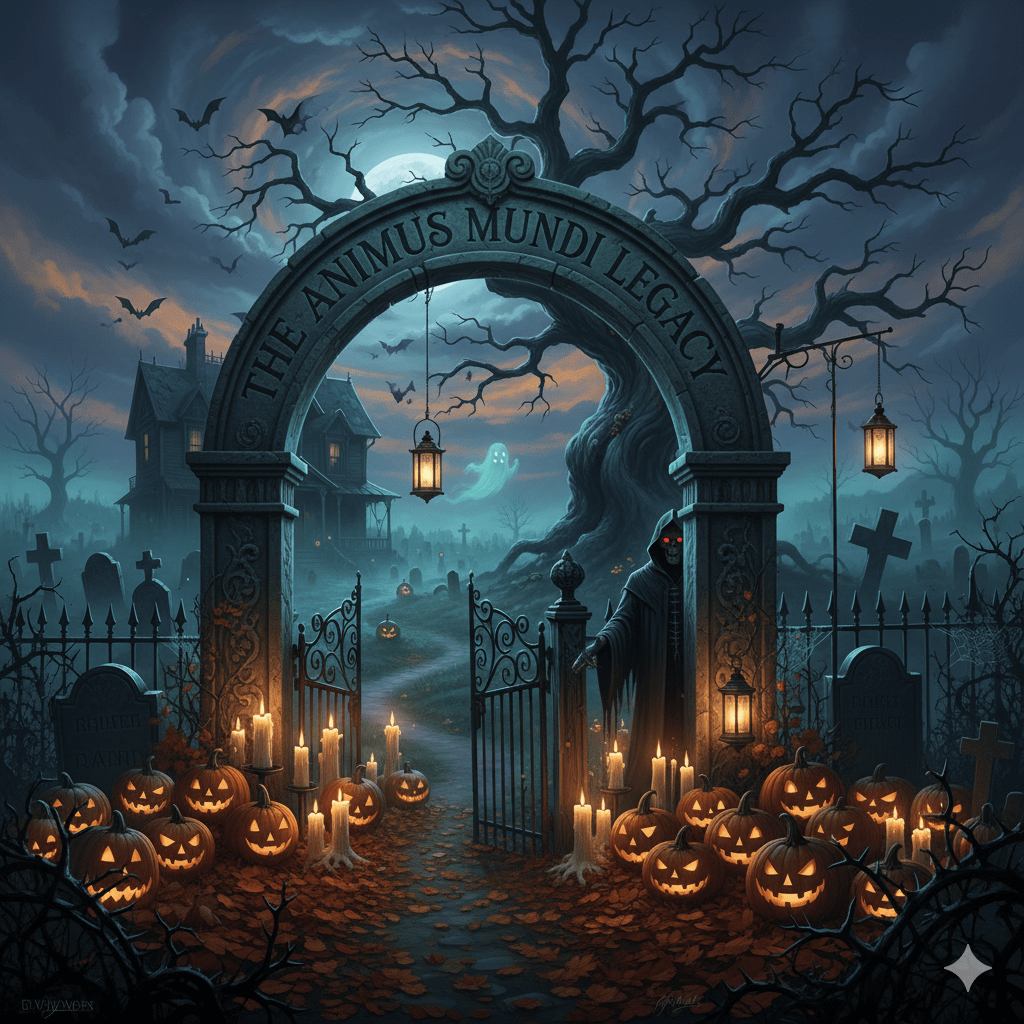
In honour of spooky season, this month’s blog is dedicated to some of the more chilling elements of Augustine. Every October, as the nights grow long and the air becomes redolent with the smell of wood smoke, rain, and burning leaves, the world seems to shift slightly. Shadows linger longer than they should, and forgotten voices whisper on the wind. It is the season when the veil between worlds grows thin, when the living and the dead almost touch.
But in Augustine, the veil is not merely a myth, and the cost of breaking through it is steep.
Extispicy
Carrion Hall is more than a manor on top of a hill—it is a monument to sacrifice, and hidden within its stone walls are the secrets of ancient rites long forgotten. Secrets that The Order of the Crimson Veil is hoping to retrieve. The Order is essentially a cult, and they have a much wider reach than Cranston Myre, as you will discover as The Knights of Aster series progresses.
One of those ancient rites is practised in Augustine—the art of Extispicy.
I stumbled upon Extispicy when researching the various forms of divination. Extispicy is an ancient form of divination that was especially prominent in Mesopotamian, Etruscan, and Roman religions. Its purpose was to seek omens, guidance, or warnings from deities—often before major decisions, such as battles. A way of divining the will of the gods or reading the future by examining the entrails of a sacrificed animal.
With quick and efficient fingers, the cat’s liver and spleen were carefully put aside. The heart, kidneys, and lungs were put into separate jars of embalming fluid, and the blood allowed to drain into several grooves carved purposely into the table and left to drip over the edge into a large, green bucket.
Dee worked with a purposeful rhythm. She had performed this task a hundred times over, almost always seeking the same reassurances.
She swiftly removed the cat’s intestines and laid them out on the table next to the liver and spleen. Then she began dissecting.
Gruesome work and not for the faint-hearted!
Draiocht
In reality, Draiocht (pronounced dree-ukht) is an old Irish word meaning magic, sorcery, or enchantment. In Celtic lore, it is referred to as a subtle, natural form of power—the kind that weaves through stone circles—the living current of the world—the unseen harmony that binds all things.
In Augustine, the Draiocht were a peaceful people who made their home on Earth, wanting nothing more than to live in harmony with the human race, to learn from them, and to give knowledge in return. Similar to humans in every way, their only outstanding feature was the ability to harness Earth’s natural energy—to transfer it for healing, to bind it to blood, and in some cases, to use it as a weapon. But time has a way of twisting truth into something nefarious, and the name Draiocht soon became synonymous with witches, necromancers, and evil doers.
The Holy Tetrad or Blood Moon
Historically, the Tetrad (from the Greek Tetras, meaning four) has long been considered a symbol of stability and cosmic order. In Pythagorean philosophy, the tetrad held deep mystical significance, not least of all because of the sacred triangle known as a Tetractys. The Tetractys triangle is a figure of ten dots (1 + 2 + 3 + 4) – a symbol that represents, amongst other things, the four elements—earth, air, fire, and water.
The Tetrad is also used in Christian symbolism and in Alchemy, but in Augustine, the Holy Tetrad is represented by the moon.
In astronomy, a lunar tetrad refers to a series of four consecutive total lunar eclipses, each separated by six full moons, without any partial eclipses in between.
- During a total lunar eclipse, the moon passes fully into Earth’s shadow and often turns a deep red hue—hence the term Blood Moon
- These tetrads occur in patterns across centuries but are relatively rare
- Historically, they’ve been interpreted by some cultures and religious groups as omens or signs of cosmic change because of their vivid and unsettling appearance
The last notable tetrad occurred during 2014-2015. This is the time period in which Augustine is set. The next tetrad is expected to occur in 2032-2033.
In summary, the Tetrad represents the bridge between the spiritual and material worlds—a rare and awe-inspiring event that has long stirred myth and prophecy. As each eclipse marks a descent into shadow and return to light, it is a perfect embodiment of death and resurrection—or loss and awakening.
The Veil Between Worlds
Halloween celebrates mystery, mischief, and the supernatural, but Augustine lingers on what happens when that veil is torn. When grief drives one to seek the dead, when faith twists into obsession, and when love demands the unthinkable.
To those who turn the pages of The Animus Mundi Legacy, the question becomes: How far would you go to bring back what was lost? How far would you go to return from the dead?
This Halloween, step into the world of The Animus Mundi Legacy.
Let the candles gutter and the veil thin—and discover what awaits in the darkness between the pages.
 EMERSON LAINE
Leave a comment